Preparation Built on Hands-On Learning
Preschool Programs (3–5 Years) in Peabody for children entering kindergarten within one to three years
Children between three and five years benefit from school readiness curriculum that introduces early literacy and math concepts through group learning, creative arts, and STEM-based play rather than worksheet drills. The preschool program includes activities designed to build cooperation, following multi-step directions, and sustained attention during structured lessons. Families preparing children for kindergarten entry need environments that teach foundational academic skills while maintaining the play-based exploration that supports this developmental stage.
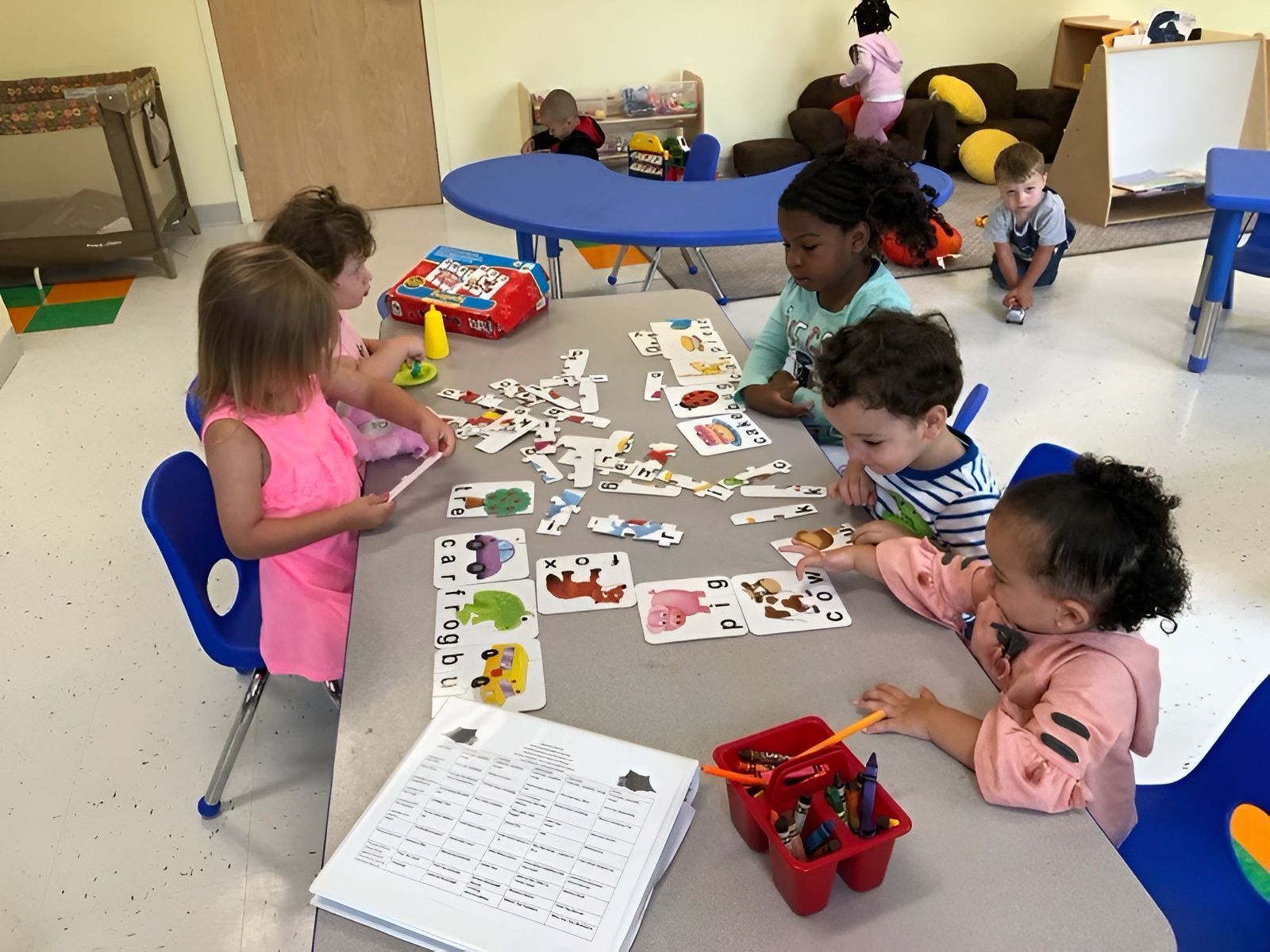
Little Star Child Care Center offers preschool programming in Peabody that balances teacher-led circle time, small group activities, and child-directed play stations that rotate weekly to introduce new materials and concepts. The curriculum addresses letter recognition, phonemic awareness, number sense, pattern identification, and early writing skills through hands-on activities rather than passive instruction.
Schedule an observation visit to see classroom activities in action and review the current curriculum focus areas.
What School Readiness Curriculum Includes
Daily activities incorporate early literacy through interactive read-alouds where children predict story outcomes, identify rhyming words, and connect text to illustrations, building comprehension skills that transfer to independent reading later. Math concepts appear during calendar time, snack distribution that involves counting and one-to-one correspondence, measuring during cooking projects, and sorting games that teach categorization and comparison.
Children demonstrate readiness for kindergarten by recognizing letters and their sounds, writing their first names, counting objects accurately up to twenty, participating in group discussions without interrupting, and managing classroom routines like transitioning between activities and cleaning up materials independently. Parents observe increased curiosity about written words, willingness to attempt new challenges without immediate adult help, and ability to sit through longer stories at home.
STEM-based play activities include building with blocks and discussing concepts like balance and stability, exploring magnets and making predictions about attraction, planting seeds and observing growth over time, and simple science experiments that introduce cause-and-effect reasoning. Creative arts and crafts develop fine motor control needed for writing while encouraging self-expression and decision-making.
What Families Want to Know About Preschool
Parents enrolling preschoolers often have questions about how academic content is taught and what skills children gain before kindergarten.
How does the program teach early literacy without making learning feel forced?
The curriculum embeds letter and sound recognition into songs, games, storytelling, and art projects that feel like play to children while systematically building phonemic awareness and print concepts needed for reading readiness.
How do group learning activities prepare children for kindergarten classroom expectations?
Children practice raising hands to speak, waiting for turns, listening while others share ideas, following multi-step instructions, and working cooperatively on projects, building the self-regulation and social skills that teachers expect at kindergarten entry.
How does the Peabody preschool program align with local kindergarten expectations?
The curriculum addresses Massachusetts early learning standards and incorporates skills that Peabody elementary schools expect incoming kindergarteners to demonstrate, including basic letter knowledge, number recognition, ability to follow classroom routines, and social-emotional readiness for group learning environments.
What math skills do children develop through preschool activities?
Daily math experiences include counting during attendance, recognizing written numerals, creating and extending patterns with manipulatives, comparing quantities, identifying shapes in the environment, and measuring ingredients during cooking activities that make abstract concepts concrete.
What types of progress updates do parents receive about school readiness?
Little Star Child Care Center provides developmental assessments that track progress in literacy, math, social skills, and physical development, along with regular communication about specific milestones observed and suggestions for reinforcing skills at home.
Little Star Child Care Center prepares preschoolers in Peabody for successful kindergarten transitions through developmentally appropriate curriculum. Call (818) 441-1566 to discuss enrollment and visit the preschool classroom.